Ashik Aseem started photography by accident. He was eighteen, on a borrowed camera, on a monsoon morning in Kozhikode, when his uncle handed him a Nikon and said, “don’t break it.” He’s never given it back.
The Kerala years.
The first six years he didn’t travel anywhere. He photographed Kozhikode. The fish market at 4 AM. The traditional chettu boats in the canals. The way light comes through coconut palms when the afternoon storm hasn’t hit yet. Locals laughed at him at first. They eventually let him in.
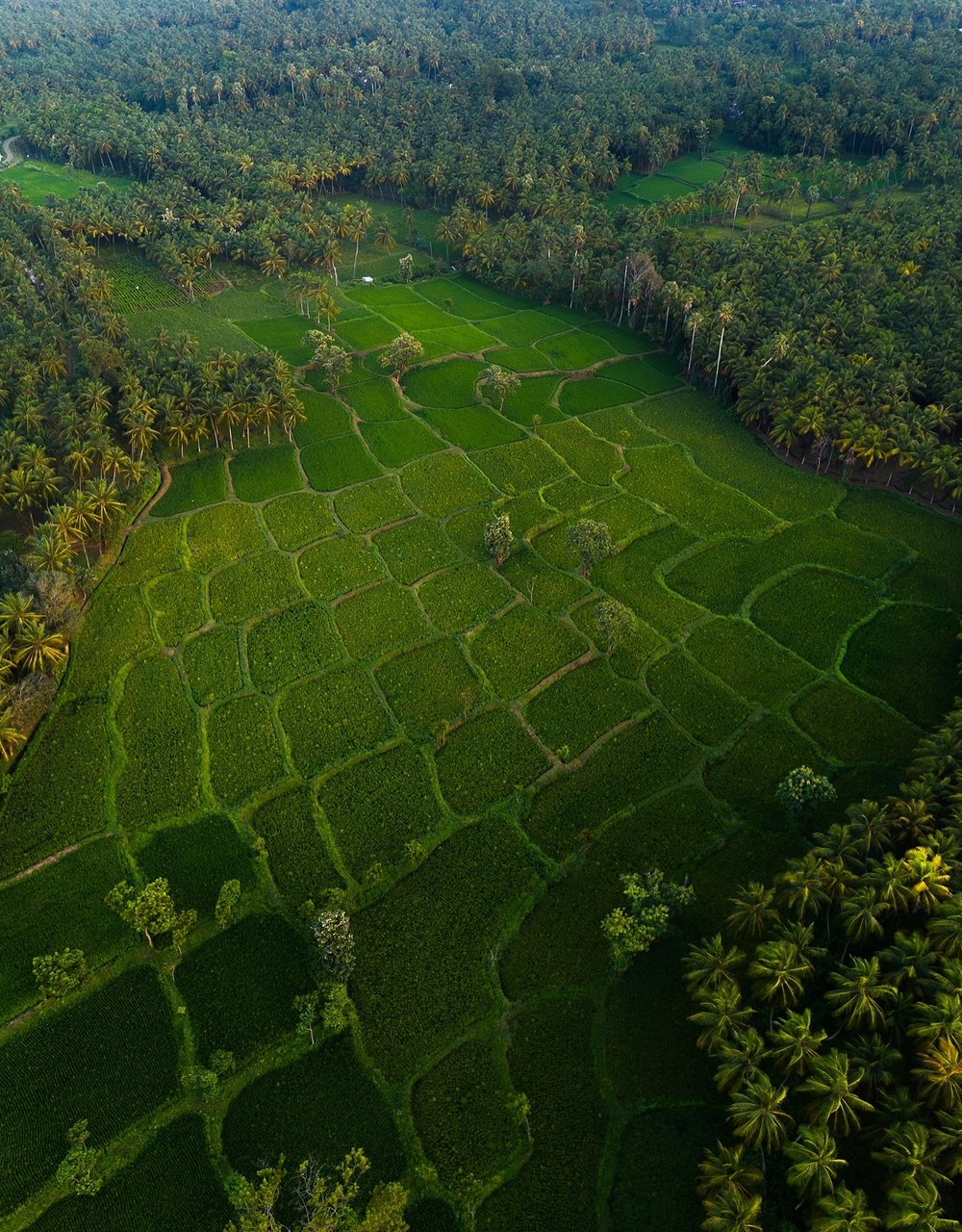
When the drone showed up in 2019, his entire practice changed. Suddenly the backwaters could be read like a map — patterns nobody had photographed before. A single frame from that first season — a lone houseboat carving a wake through emerald rice fields — was picked up by Outlook Traveller, then Conde Nast, then DJI itself. The phone hasn’t stopped since.
Going north.
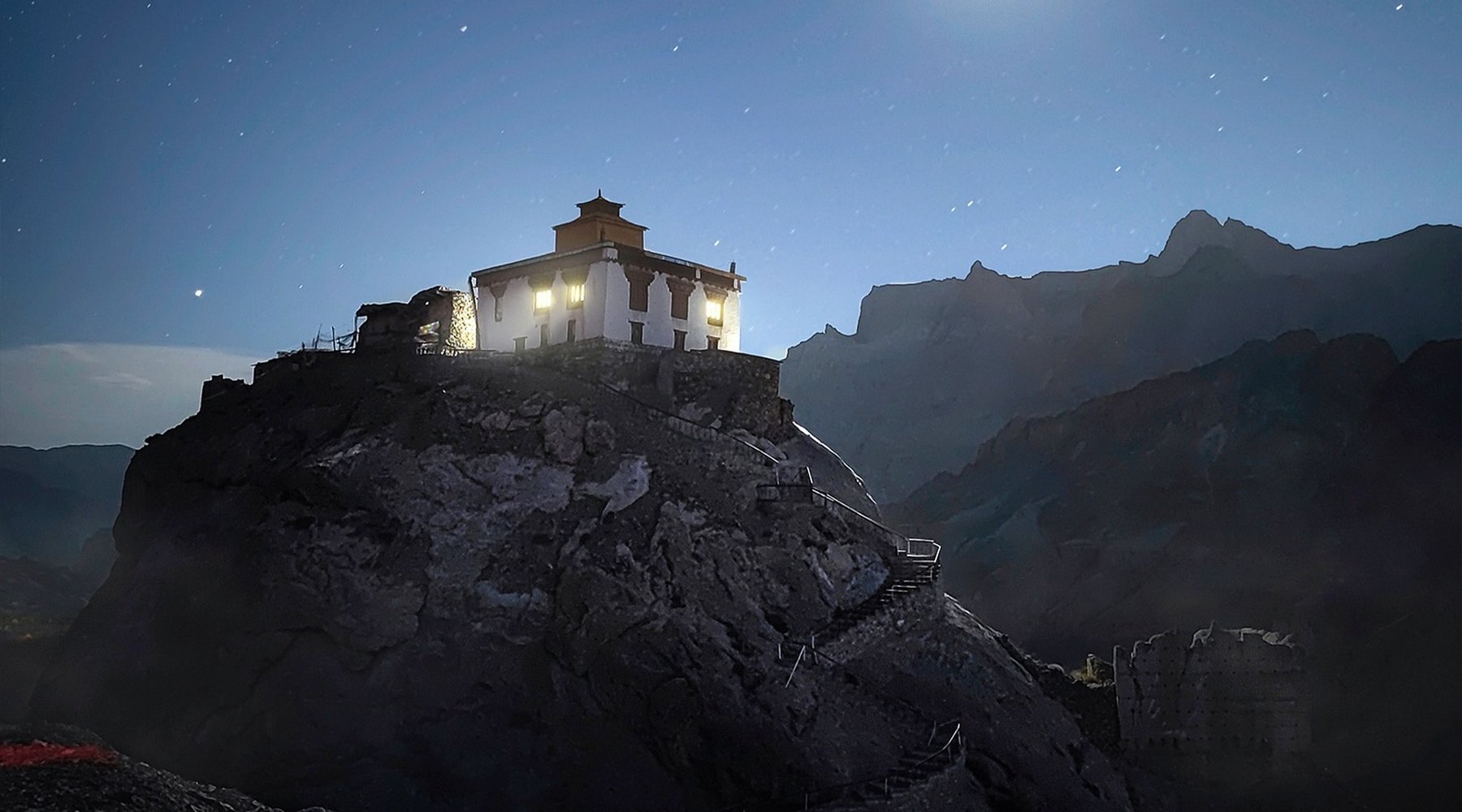
In 2022 he got on a train going as far north as Indian railways will take you, and stayed up there. Kashmir in apple-blossom season. Spiti in winter. Ladakh, where the air is thin and the light is impossible. Meghalaya’s living root bridges, photographed before sunrise on a path that locals walked twenty generations of feet into the soil.
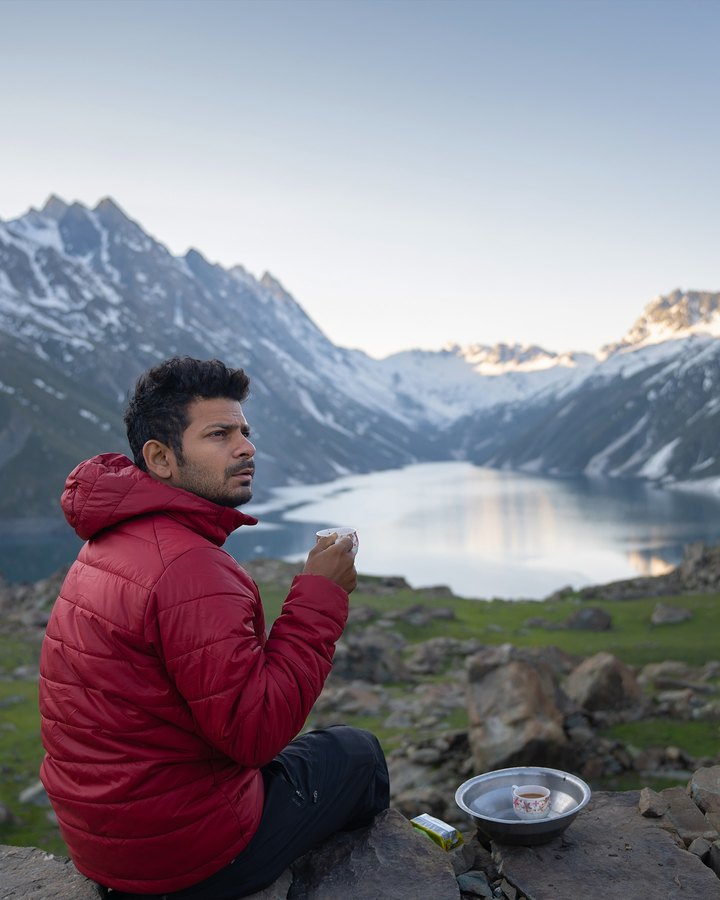
He went alone. He goes alone almost every time. Two years on the road, one backpack, a tripod, a thermos. Sleeps in tents, in homestays, in trains, in the back of taxis when there’s nowhere else.
The Postcard Photographer.
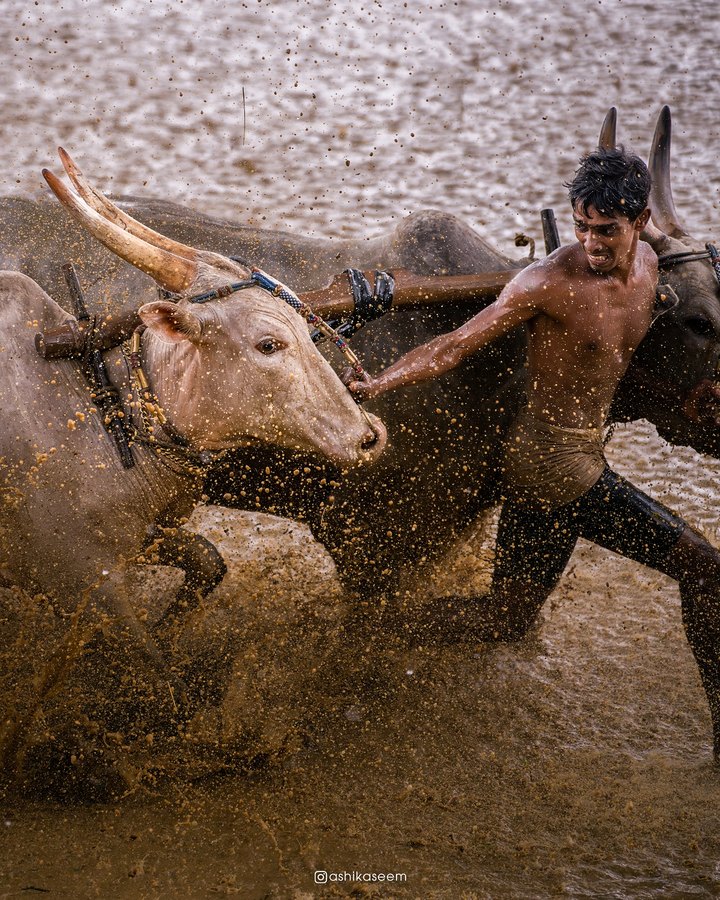
Somewhere along the way, he started printing the photos he took of people he met — fishermen, shepherds, children — and posting them back. By hand, in envelopes, from whichever post office happened to be open in whichever village he’d ended up in. Often it took him months to find a working postal route. Always he sent the print.
It became its own thing. Then it became the work. Today over 2,400 postcards have gone out. Many people frame them. Some have written back. The newspapers gave him a name for it, which he tolerates: the Postcard Photographer. He doesn’t really think of it that way. He thinks of it as the minimum he could do.
What he’s after.
I’m not really a photographer. I’m a person who walks too far, sleeps in odd places, drinks bad tea, and occasionally happens to be holding a camera when something quiet decides to happen.
Awards have piled up — two consecutive Travel Photographer of the Year wins from Outlook Traveller, Sky Pixel Top 50 Aerial, National Geographic Editor’s Pick, an eight-page feature in Asian Photography Magazine. Brands followed — DJI, Insta360, Adobe, Royal Enfield, Renault, Škoda, MG, IndiGo, Tamron, Instax, Ather, Kerala Tourism. None of it changes the basic shape of the work, which is: walk somewhere, sit down, wait. The frame is the side-effect. The walk is the work.
Where he’s headed.
The next two years are committed: a long-form Northeast India series across Nagaland, Mizoram and Arunachal; a return to Kashmir for the winter (third time); a first trip overseas, finally, to Bhutan. He’s also building a small workshop programme so he can stop being asked which lens, on which mountain, at which hour.
The thermos comes too. So does the postage book.